Comedy Club vs. Theater: Same Comic, Very Different Night
Seeing a comedian in a 200-seat club and seeing them in a packed theater can feel like two completely different shows. Here's what actually changes.
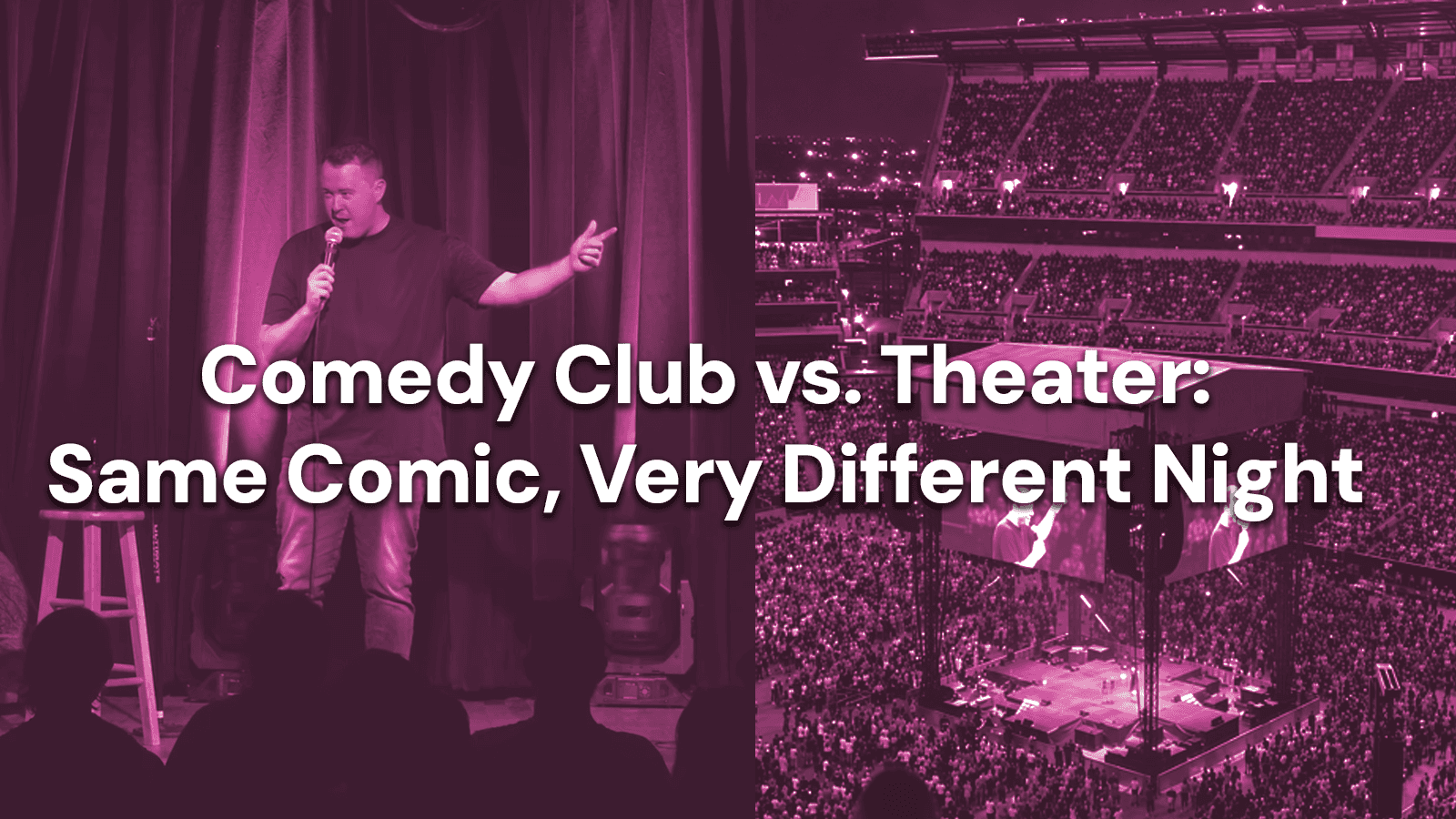
You find out a comedian you like is coming to town.
Good news.
Then you notice where they're playing.
Maybe it's a comedy club with a couple hundred seats, tiny tables and a stage close enough that suddenly you're reconsidering the front row.
Maybe it's a theater with balconies, assigned seats, a real lobby and enough people waiting for the bathroom that you briefly wonder whether this was a sporting event.
Both are stand-up shows.
They are not the same night.
A comedian can tell the same joke in both rooms and get a completely different reaction. The material might change. The pacing might change. The audience definitely changes. Even your relationship to the person onstage feels different.
None of that makes clubs better than theaters, or theaters better than clubs.
It just means the room is part of the show.
In a club, the comedian is right there
The obvious difference is distance.
In a traditional comedy club, even a bad seat is often pretty close to the stage. You can see facial expressions without looking at a screen. You can hear somebody at the next table losing it. You can also become extremely aware that the comedian can see you.
That last part changes things.
A club audience feels accessible to the performer. A comic can ask somebody a question, react to a weird laugh, notice a late arrival or abandon five minutes of planned material because something more interesting just happened three feet from the stage.
Not every club show involves crowd work, and not every comedian wants it to. But the possibility is always hanging around.
The room feels permeable.
There is the stage, and there is the audience, but the border between them isn't particularly secure.
That's part of the fun.
It's also why arriving 15 minutes late to a 150-seat comedy club can feel considerably more consequential than arriving 15 minutes late to a movie.
In a theater, the comedian has to reach you
Move that same comedian into a 1,500-seat theater and the geometry changes.
The people in the balcony are no longer part of an easy conversation. A raised eyebrow that kills in a club might be invisible from the back of the room. Small gestures have to travel farther. Pauses feel different when they're sitting in front of a thousand people instead of a hundred.
Good theater comics know how to fill that space.
Sometimes that means more physicality. Sometimes it's pacing. Sometimes it's simply material polished enough that the performer knows exactly where the audience is going to react.
The room can also do things a club can't.
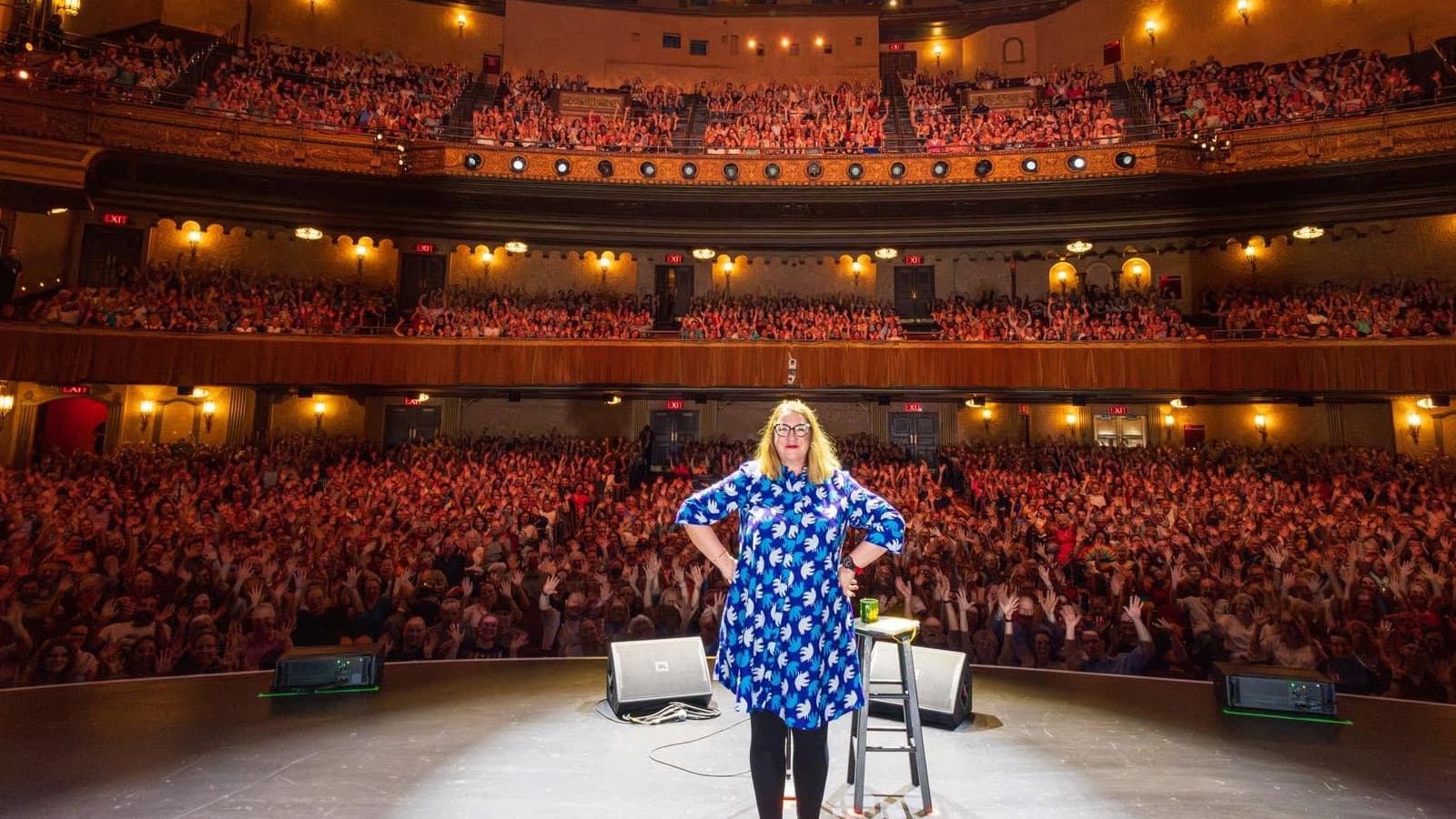
A theater entrance can feel like an entrance. Lighting matters more. Music can hit harder. Production can become part of the night without turning the whole thing into a concert.
And when 1,500 people laugh at once, you feel it.
A club laugh surrounds you.
A theater laugh can roll through the building.
Both are great. They're just different sensations.
The material may not be in the same place either
This is one of the more interesting differences, especially if you see a comedian more than once.
Comedy clubs are where a lot of material gets built.
That doesn't mean every club show is an experiment. Plenty of comics bring completely finished acts into clubs, and touring headliners can perform very polished sets in small rooms.
But clubs are especially well suited to trying things.
The audience is close. The comic can feel quickly when a sentence is too long, when a punchline needs another beat or when a joke that looked great in a notebook has arrived in public and immediately died.
That feedback is useful.
Sometimes you'll see a comedian glance at their notes. Sometimes they'll try a joke twice with slightly different wording. Sometimes they'll wander into a story that clearly does not have an ending yet.
When it works, you get the feeling that you're watching something being made.
Theater shows tend to happen later in that process.
By the time a comedian is touring a full hour through large theaters, there is usually more structure. Transitions are tighter. Material has been tested. The order matters. The show may have an opening sequence, lighting cues or other production elements that assume the comedian knows roughly what's going to happen next.
The club can feel like a workshop.
The theater can feel like opening night.
Of course, comedy enjoys ruining simple rules, so you can absolutely see a comic experimenting in a theater or delivering a ruthlessly polished hour in a 100-seat club.
Still, the rooms tend to encourage different things.
A club crowd can become part of the show
Put 150 people in a dark room, sit them close together and point them toward a low stage.
They become a crowd very quickly.
You hear individual laughs. Somebody behind you has a laugh that becomes a recurring character. The comic hears all of it too.
That makes the audience feel present in the performance.
If a joke bombs, everyone knows.
If something unexpected happens, everyone knows.
If the comedian says something ridiculous to a guy named Brian in the front row, Brian may now be part of the show for the next 40 minutes.
This immediacy is one reason small-room comedy can feel so alive.
There is a little danger in it.
Not actual danger, hopefully.
Just the sense that the show could turn left at any moment.
A theater crowd can disappear into one big reaction
Theater audiences work differently.
You probably aren't hearing one person's laugh from the balcony. You're hearing sections of the room react together.
Individual people become less visible, but the crowd as a whole becomes more powerful.
A big theater laugh has weight to it. So does a big silence.
There is something satisfying about watching a joke you've heard before flatten an entire room at once.
This is also where stand-up starts borrowing a little from live music.
People may have waited months for the date. They know the comic's previous specials. They recognize an entrance song. The comedian walking onstage gets an ovation before saying anything.
The event itself becomes part of the appeal.
At a club, you might be going out to see comedy.
At a theater, you may be going specifically to see that comedian.
That difference changes the audience before the show even starts.
Your seat matters differently
Comedy clubs and theaters both have bad seats. They just invent them in different ways.
A club can put you behind a support column, next to a service station or so close to the stage that your evening suddenly includes maintaining eye contact with a professional comedian.
Theater seating is more predictable.
Assigned seats let you know roughly what you're getting, and purpose-built theaters usually have better sightlines across a much larger room. You can arrive without negotiating with a host about whether your party of three can fit around a table designed for two beverages and one human knee.
But distance becomes the tradeoff.
From the back of a large theater, you're experiencing the whole room as much as you're watching the performer's face.
Very large venues sometimes add video screens, which solves one problem while creating the mildly strange experience of paying to see a person live and then spending part of the night watching television footage of the person who is standing directly in front of you.
Again, neither setup automatically wins.
Do you want intimacy or scale?
That's really the choice.
Clubs have distractions. Theaters have logistics.
A comedy club is intimate partly because a lot is happening in a small space.
Servers move through the room. Drinks arrive. Food appears. Somebody discovers halfway through the headliner's set that they apparently need ketchup immediately.
A good club staff gets very good at doing all of this quietly.
A theater removes many of those distractions once the show starts. You're in your seat. The lights go down. There generally isn't someone leaning across your punchline to ask whether you'd like another IPA.
But theaters create their own friction.
Parking. Security lines. Finding your seat. Balcony stairs. A lobby containing 1,200 people who all had the same idea about buying a drink ten minutes before showtime.
The comedy itself may feel more controlled.
Getting to it can feel like a minor expedition.
And then there is stadium comedy
The jump from club to theater is already significant. Stadium comedy takes the same question and stretches it almost as far as it can go.
Shane Gillis is a useful example because there are two very different versions of his stand-up available to compare.
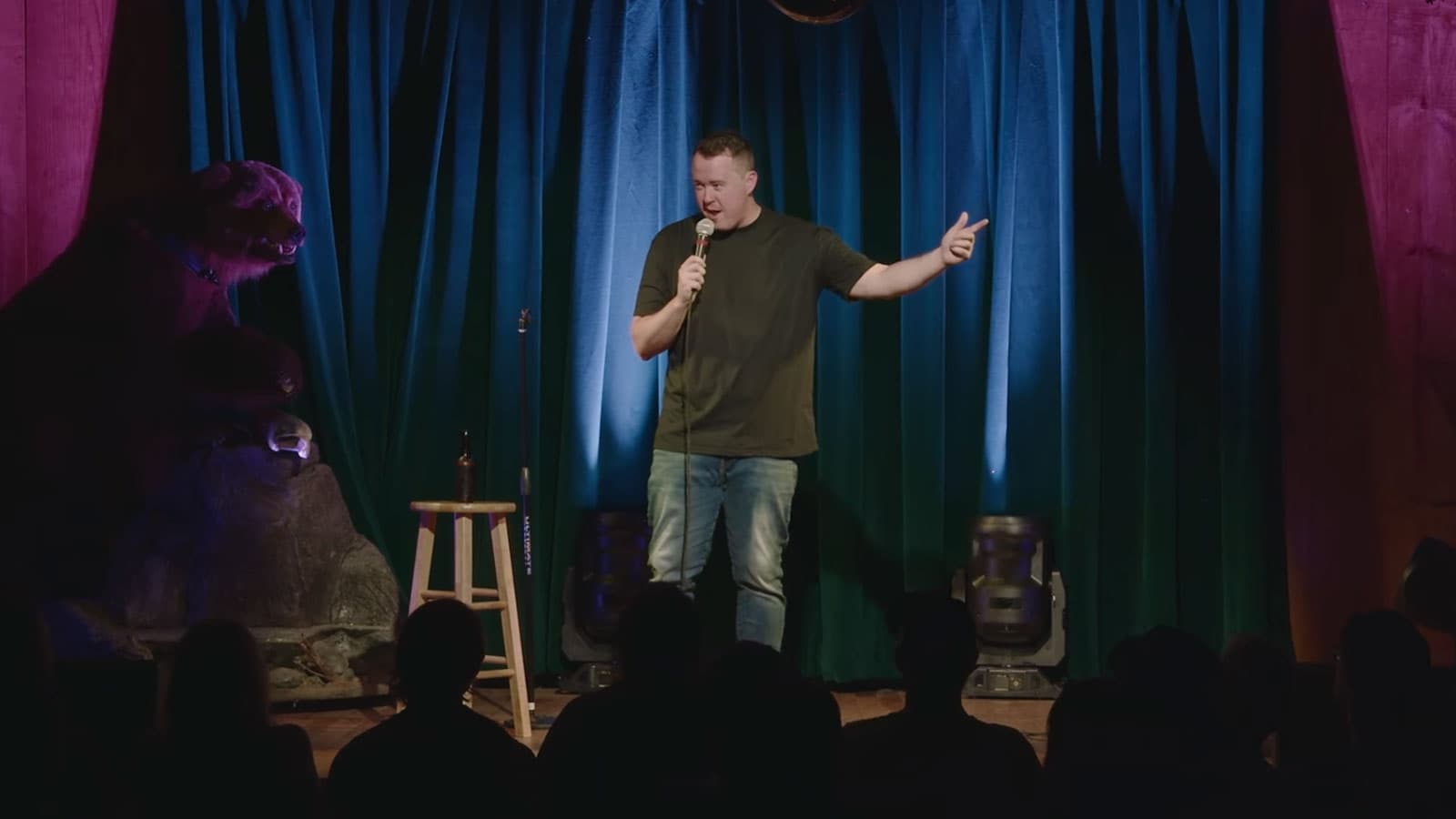
His 2021 special Live in Austin was recorded at The Creek and The Cave in Austin and released free on YouTube. It looks and feels like a club show. The audience is close, individual reactions are audible, and the room keeps the focus tightly on one comedian and a microphone.
Five years later, Gillis performed at Lincoln Financial Field in Philadelphia in front of 73,946 people. Guinness World Records recognized the July 17, 2026 performance as the largest audience for a comedian. The event also included special guests and musical performances, pushing the night toward the scale of a major stadium event rather than simply a very large club show.
Those two performances sit at opposite ends of the same basic art form. The club gives you proximity. A stadium gives you scale.
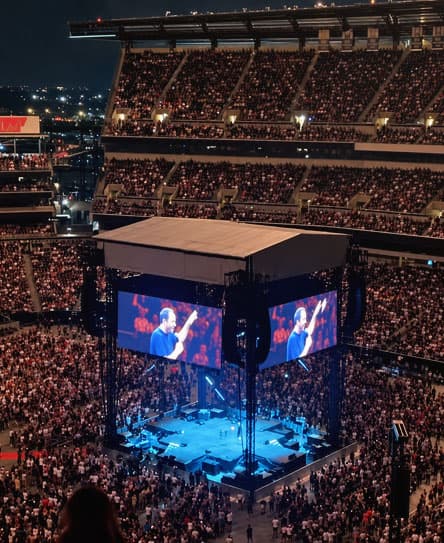
At stadium size, production becomes much more important. Most of the audience cannot read the comedian's face directly from the stage, so video screens, sound reinforcement and the overall staging have to carry details across an enormous space. Audience reaction changes too. Instead of hearing the person at the next table laugh, you're hearing tens of thousands of people respond together.
There are tradeoffs. Some of the intimacy that makes a small comedy room special is inevitably reduced when the back row is hundreds of feet from the stage. At the same time, a stadium can create something a club physically cannot: the feeling of an enormous crowd showing up together for stand-up.
It also says something about how large live comedy has become. A comedian filling a football stadium would have sounded unusual not that long ago. Gillis drew a larger verified audience for a comedy performance than anyone Guinness had previously recorded.
That doesn't make stadium comedy the destination every stand-up show is trying to reach. It is another version of the experience, and one that asks the performer, production team and audience to interact in a very different way.
Small doesn't mean amateur, and big doesn't mean better
Venue size can accidentally become a status ranking.
A comedian starts in small rooms, gets successful and "graduates" to theaters, arenas and, in rare cases, stadiums.
There is some truth to the career trajectory. Selling 2,000 tickets is obviously different from selling 200, and selling more than 70,000 is different again.
But the audience experience does not improve in a straight line with seating capacity.
Comedians who can fill theaters still play clubs.
Some return to work out new material. Some want the intimacy. Some do unannounced sets. Some simply like performing in rooms built specifically for stand-up.
A theater isn't just a club with more chairs, and a stadium isn't just a bigger theater.
The comedian has to adjust to the room. The audience experiences the show differently. Scale becomes part of the performance.
At each step, scale changes what the night can do and what it gives up.
The more useful question is what kind of night you want.
If you really like a comedian, try both
Seeing the same comic in different-sized rooms can be surprisingly revealing.
In a club, you might notice the mechanics.
You see them react. Adjust. Pause. Change direction. Deal with a strange audience moment.
In a theater, you see what happens after those mechanics have been refined.
The hour has shape. The big moments land across the entire room. You can feel the confidence of material that has survived dozens or hundreds of performances.
One feels close.
One feels big.
And sometimes the most interesting part is recognizing the same joke in both.
Maybe you heard its awkward early version in a club six months ago. Now you're watching it destroy a theater.
You got to see the joke grow up.
So which one should you book?
There isn't a correct answer.
If you like the unpredictable side of stand-up, want to be close to the stage and don't mind the possibility that the comedian may notice you exist, a club is hard to beat.
If you want to see a finished touring hour, enjoy the energy of a large crowd or want the whole night to feel like an event, a theater can be fantastic.
A lot depends on the comedian, too.
Some acts thrive on intimacy. Some seem built for a thousand-seat room. Plenty are great in both, just in different ways.
The useful thing is knowing that the venue isn't just the address printed on your ticket.
It's part of what you're buying.
Find your next comedy night.
Comedy clubs, historic theaters, breweries, casinos, bars and rooms we're still not entirely sure how to describe.
Find Comedy Near YouSometimes seeing a comic you already know in a completely different space is the interesting part.